The Theological Architecture
The Revelation Freedom
Framework
A five-step pathway rooted in Scripture, confirmed by science, and empowered by the Holy Spirit — mapping the journey from a sealed temple to supernatural freedom.
This page presents the complete theological foundation for pastors, ministry leaders, and anyone who wants to understand the biblical basis before they experience the practice.
The Story of Breath
The Biblical Narrative Arc
The entire Revelation Freedom framework rests on a single storyline that runs from Genesis to Pentecost — and into your body today.
Genesis 2:7
Creation
God formed Adam from the dust and breathed the Neshama — the Breath of Life — directly into him. Dust became a living soul. Humanity's first experience was not sight, sound, or thought. It was the Breath of God filling the temple of the body.
The temple was open. Every court was filled. The breath flowed freely.
Genesis 3
The Fall
Sin entered. Fear, shame, and disconnection sealed the three courts of the body. The breath became shallow, fragmented, restricted. Humanity still breathed — but not fully. Not freely. Not the way God designed it.
The temple still stood, but the courts were closed.
Acts 2:2
Restoration
At Pentecost, the Spirit came as a rushing mighty wind — the same Hebrew word, Ruach. The breath of God returned to fill the temple again. What was sealed is being reopened. What was lost is being restored.
The Spirit restores the breath. The breath reopens the temple.
The Five-Step Pathway
From Sealed Temple to Freedom
Each step builds on the last. Together, they form a complete journey that mirrors the biblical narrative — from the brokenness of Genesis 3 to the restoration of Acts 2.
The Problem
The Sealed Temple
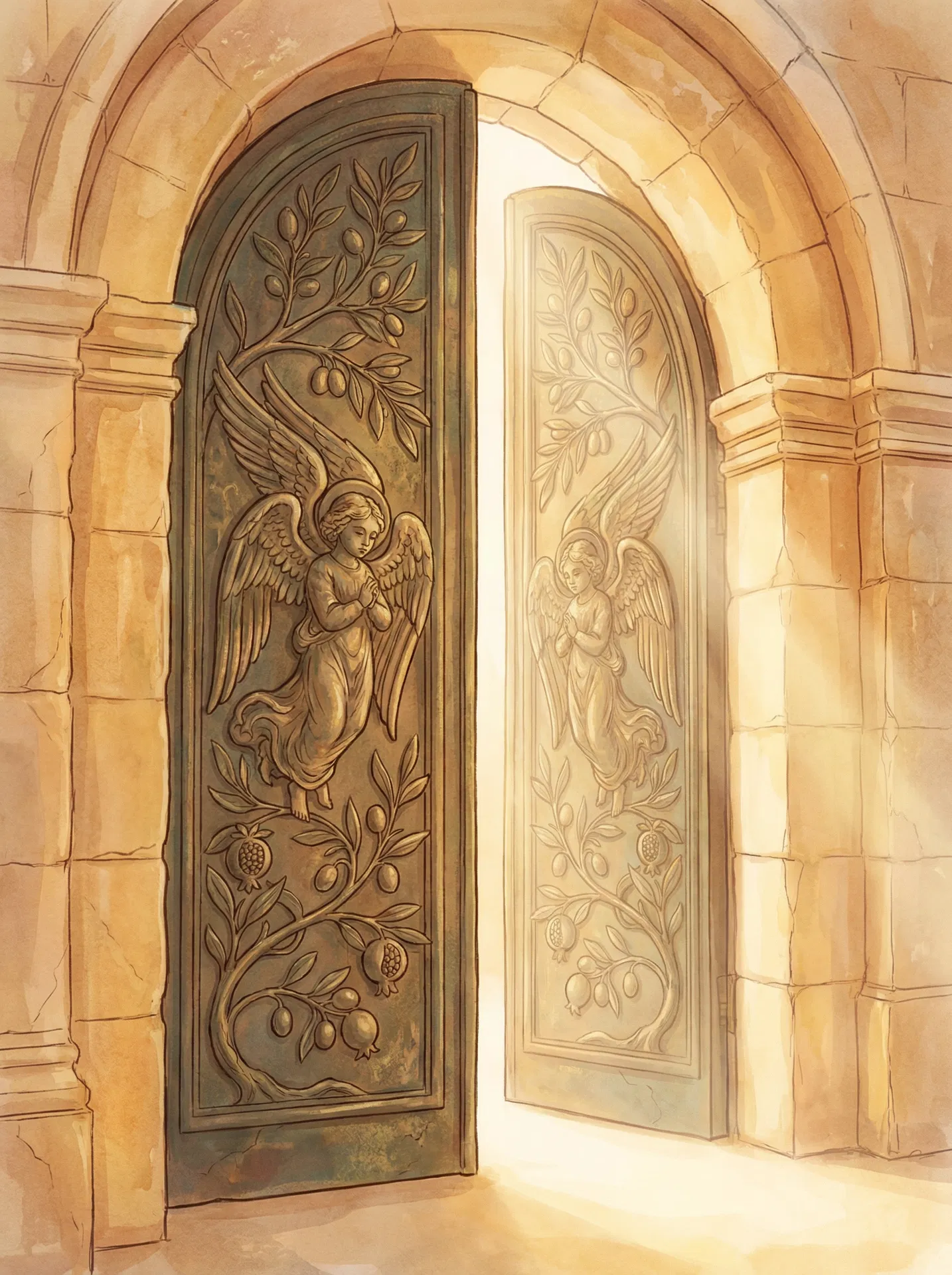
In Ezekiel 37, the prophet stands before a valley of dry bones — a nation whose breath has departed. God asks: "Can these bones live?" The answer was not willpower, strategy, or human effort. The answer was breath. "Prophesy to the breath... and the breath came into them, and they lived."
The Fall did not merely introduce sin into the human story — it introduced a physiological consequence. When Adam and Eve hid from God in Genesis 3:8, the first recorded human response to sin was to contract the body. They covered themselves. They crouched. They withdrew. That pattern of physical contraction has been passed down through every generation since.
Modern neuroscience confirms what Scripture has always taught: chronic stress, unresolved trauma, and emotional pain literally restrict the breath. The diaphragm tightens. The intercostal muscles lock. The upper chest becomes rigid. The body's three breathing zones — which correspond to the three courts of the Temple — become progressively sealed.
"Do you not know that your bodies are temples of the Holy Spirit, who is in you, whom you have received from God?"
— 1 Corinthians 6:19 (NIV)
Sealed by Shame
The Outer Court
The Belly — Diaphragmatic Zone
The diaphragm — the body's primary breathing muscle — contracts under the weight of unworthiness. The place of sacrifice and surrender becomes guarded. Shallow chest breathing replaces the deep abdominal breath God designed.
Sealed by Fear
The Holy Place
The Ribs — Intercostal Zone
The intercostal muscles between the ribs constrict under anxiety and emotional armor. The chamber of worship and communion becomes inaccessible. Grief, fear, and hypervigilance lock the ribs like a cage around the heart.
Sealed by Disconnection
The Holy of Holies
The Upper Chest — Clavicular Zone
The upper chest — where the breath reaches its fullness — remains chronically collapsed. The dwelling place of God's glory is the most commonly sealed space. The believer longs for God's presence but cannot physiologically receive it.
The Revelation
Your Body Is the Temple
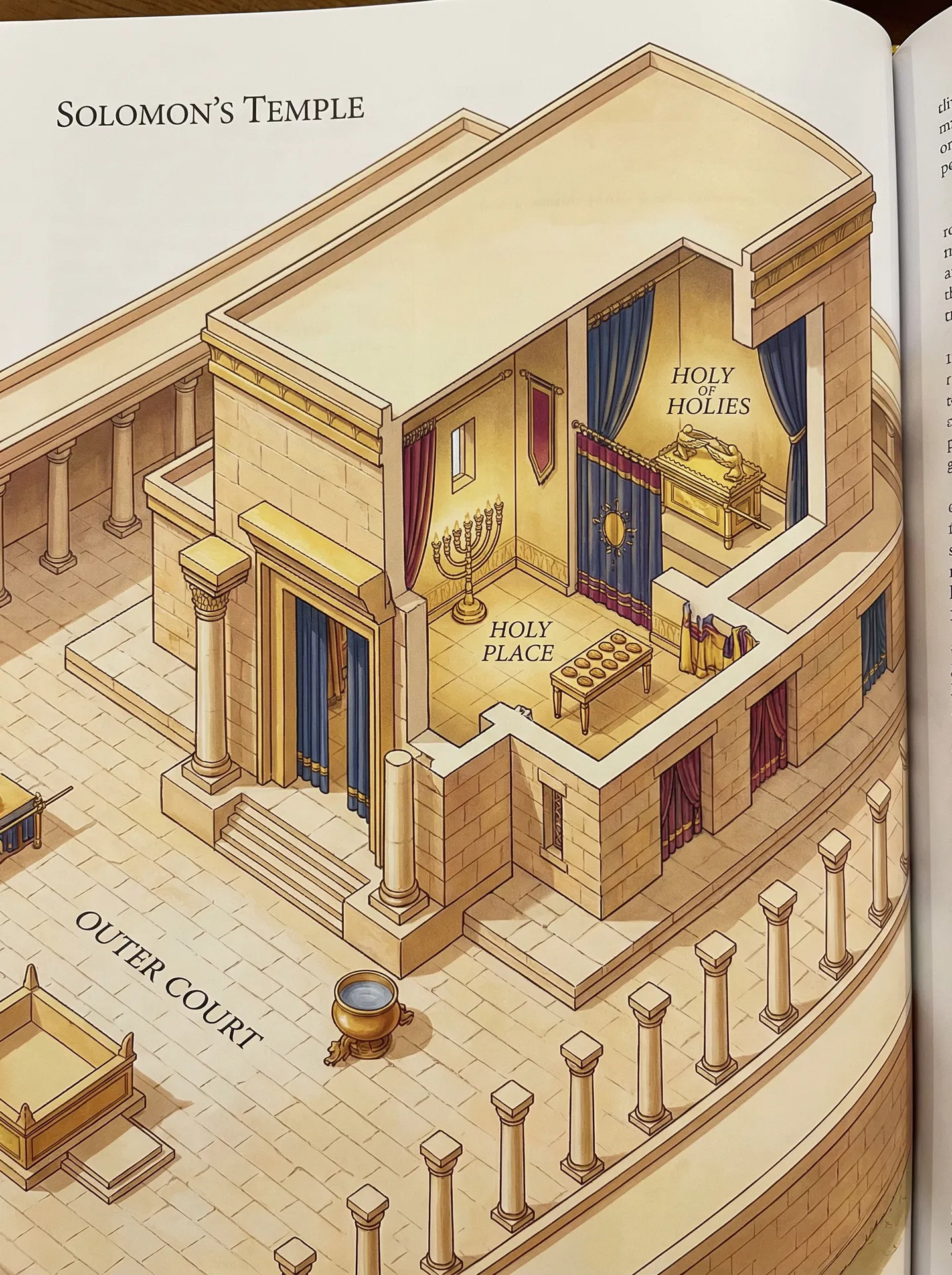
Most believers read 1 Corinthians 6:19 as a metaphor — a poetic way of saying "take care of your body." But Revelation Freedom takes this passage at its structural word. When Solomon built the Temple in 1 Kings 6-7, God gave him a precise three-part design: the Outer Court (Ulam), the Holy Place (Hekal), and the Holy of Holies (Devir).
The human respiratory system mirrors this architecture with remarkable precision. The diaphragmatic zone (belly) corresponds to the Outer Court — the place of sacrifice. The intercostal zone (ribs) corresponds to the Holy Place — the chamber of worship. The clavicular zone (upper chest) corresponds to the Holy of Holies — the dwelling place of glory.
This structural parallel is not incidental. It is the blueprint God wrote into the human body before the Temple was ever built in stone.
The Temple-Body Correspondence
Temple
Hebrew
Body Zone
Function
Outer Court
Ulam
Belly
Sacrifice
Holy Place
Hekal
Ribs
Worship
Holy of Holies
Devir
Upper Chest
God's Presence
"Then the cloud filled the temple of the Lord... for the glory of the Lord filled his temple."
— 1 Kings 8:10-11 (NIV)
The Activation
The Whole-Temple Breath
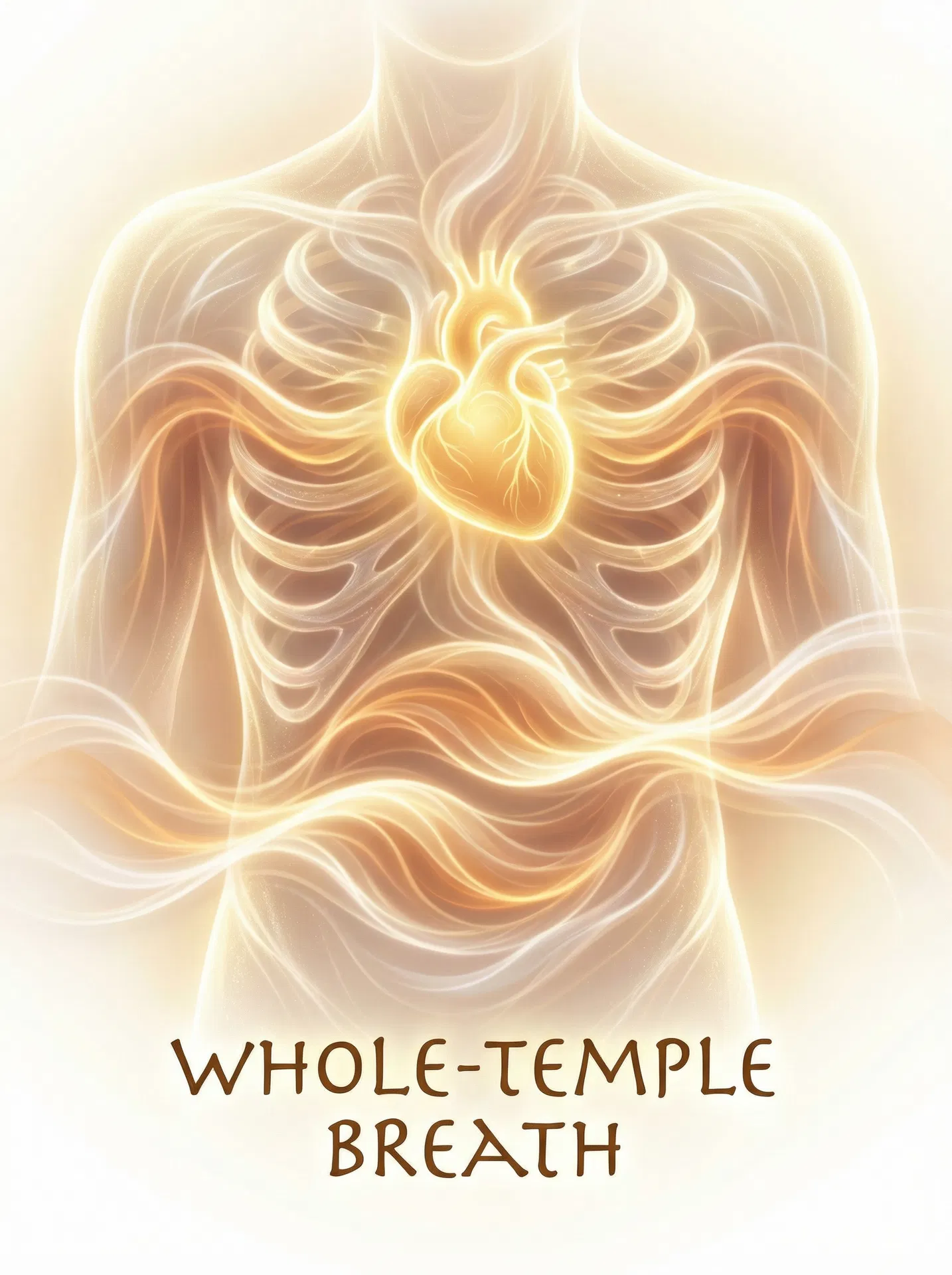
The Whole-Temple Breath is Foundation Breath I — the cornerstone practice of the entire Revelation Freedom system. It is a slow, intentional nasal breath that moves sequentially through all three zones of the respiratory system, mirroring the priestly procession through the three courts of Solomon's Temple.
This practice is not derived from pranayama, Wim Hof, or any secular breathwork modality. It originates from the observation that God designed the human respiratory system with three distinct zones that correspond to the three sacred spaces of the Temple — and that a full, unimpeded breath through all three zones was the original design of Eden.
Physiologically, the Whole-Temple Breath activates the vagus nerve, engages the parasympathetic nervous system, reduces cortisol production, and normalizes heart rate variability. Theologically, it reopens the sealed courts of the body-temple so the Holy Spirit can move freely through every chamber.
"You open the doors. He fills the space."
— The Revelation Freedom Principle
The Three-Stage Wave
The Belly Rises
The diaphragm descends, the Outer Court opens. You lay down what you have been carrying.
The Ribs Expand
The intercostals release, the Holy Place fills. The chamber of worship opens.
The Chest Lifts
The clavicular zone opens, the Holy of Holies becomes accessible. The dwelling place of glory fills.
One continuous wave — from foundation to sanctuary.
The Encounter
The Holy Spirit Moves

In John 3:8, Jesus tells Nicodemus: "The wind blows wherever it pleases. You hear its sound, but you cannot tell where it comes from or where it is going. So it is with everyone born of the Spirit." The Greek word for both "wind" and "Spirit" in this passage is Pneuma — the same word used for breath. Jesus was not making a casual metaphor. He was revealing a mechanism.
When the Whole-Temple Breath reopens the sealed courts of the body, it does not produce transformation on its own. The breath is preparatory, not redemptive. It opens the body, quiets the autonomic nervous system, and creates a physiological state of receptivity. But the Agent of transformation is, and has always been, the Holy Spirit Himself.
This is the critical distinction that separates Revelation Freedom from every secular breathwork program. In those systems, the breath is the end. In Revelation Freedom, the breath is the beginning — the door through which the Spirit enters.
"Not by might nor by power, but by my Spirit, says the Lord Almighty."
— Zechariah 4:6 (NIV)
John 14:26
The Comforter Comes
The Spirit brings healing for wounds no counseling could fully reach — stored grief, childhood trauma, emotional armor that has calcified over decades.
John 16:8
The Convictor Speaks
The Spirit brings conviction — gentle, specific, and redemptive. Not condemnation, but the precise truth needed for the believer to repent and be free.
Acts 1:8
The Power Descends
The Spirit brings power — Dunamis — to break what willpower alone could never break. Addictions, cycles, strongholds yield to the power of the Spirit.
The Outcome
Freedom
In Galatians 5:1, Paul writes: "It is for freedom that Christ has set us free. Stand firm, then, and do not let yourselves be burdened again by a yoke of slavery." Freedom is not a side effect of the gospel — it is the stated purpose. Yet many believers live in a paradox: theologically free, but experientially bound.
The Revelation Freedom framework resolves this paradox by addressing what traditional ministry often overlooks: the body. Cognitive understanding of freedom is not the same as embodied experience of freedom. A believer can know the truth intellectually while their nervous system remains locked in survival mode.
When the temple opens and the Spirit moves, the freedom described in Scripture becomes a lived, physical, emotional, and spiritual reality. This is the subtitle of Revelation Freedom made manifest: breaking the bondage of stress, sin, and suffering — not through human effort, but through the convergence of God's design (the breath), God's dwelling place (the body), and God's power (the Spirit).
"Now the Lord is the Spirit, and where the Spirit of the Lord is, there is freedom."
— 2 Corinthians 3:17 (NIV)
The Heart of the Framework
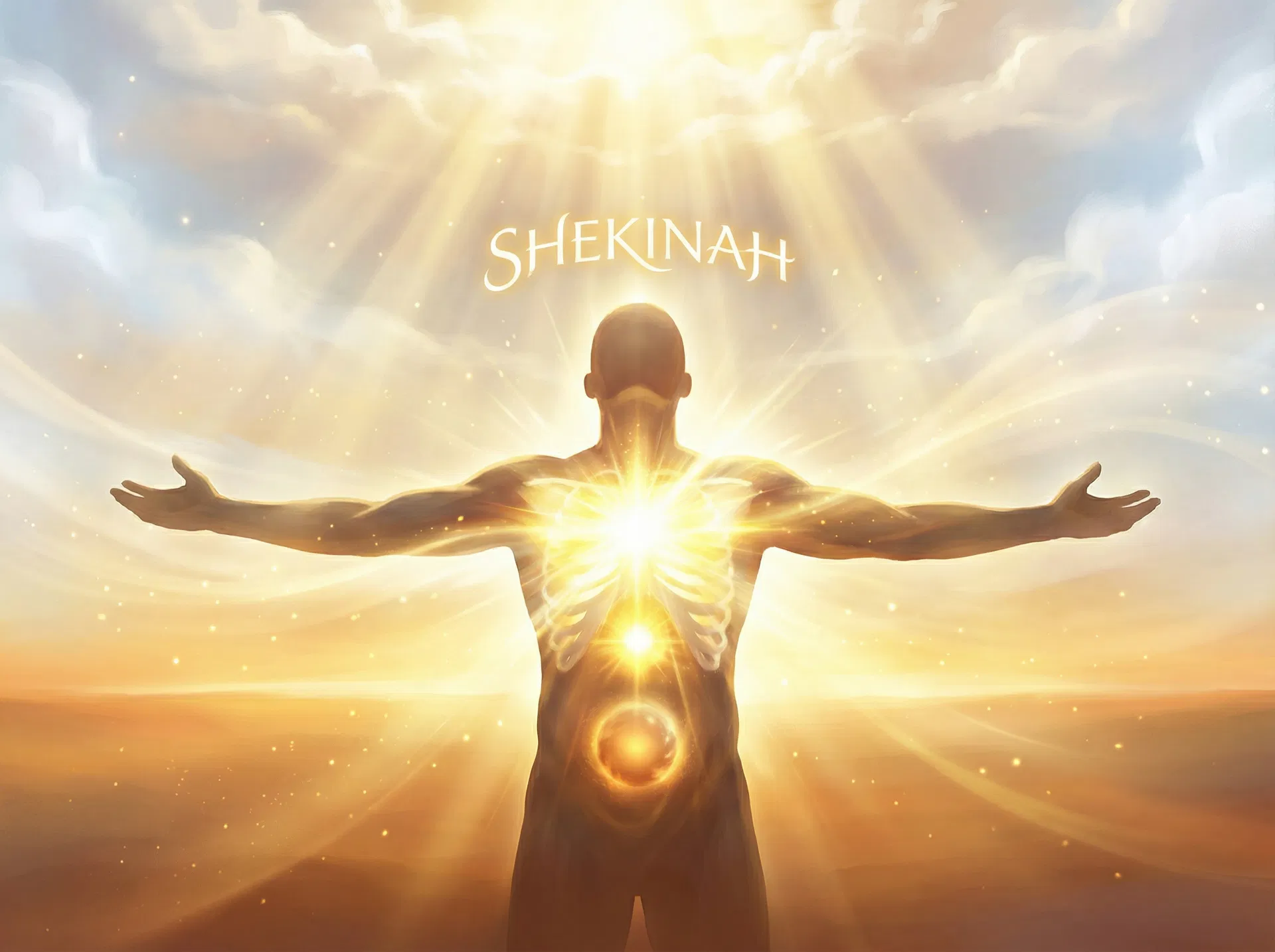
Breath Does Not Transform People.
The Holy Spirit Does.
This is the most important theological distinction in the entire framework. It is the line that separates Revelation Freedom from every secular breathwork program, every Eastern meditation practice, and every wellness trend that borrows spiritual language without spiritual authority.
What This Is Not
- ✕
Pranayama, kundalini, or any Eastern breathwork practice repackaged with Christian language
- ✕
A self-help technique where the breath itself is the agent of healing or transformation
- ✕
A wellness trend that borrows spiritual vocabulary without spiritual authority
- ✕
A practice that bypasses Scripture, theology, or the lordship of Christ
What This Is
- ✓
A biblical practice rooted in Genesis 2:7, 1 Corinthians 6:19, and Acts 2:2
- ✓
A method of preparing the body-temple so the Holy Spirit can move freely within it
- ✓
The breath is the vehicle — the Spirit is the driver. The breath opens; the Spirit transforms.
- ✓
An encounter with the living God through the breath He gave you, under the authority of His Word
"The breath opens the body. The breath quiets the mind. The breath creates space for encounter. But the breath does not do the transforming. What happens next is between you and Him."
The Complete System
Three Foundation Breaths + Four Pillars
The Revelation Freedom framework consists of seven sacred practices. The three Foundation Breaths form the daily bedrock. The four Pillars target specific dimensions of spiritual encounter and healing, each building on the open temple the Foundation Breaths create.
The Three Foundation Breaths
The Cornerstone
The Whole-Temple Breath
The signature practice. A slow, intentional nasal breath that moves like a wave through all three courts — belly, ribs, chest. It restores the breath of Eden and reopens the sealed temple.
1 Corinthians 6:19 — Solomon's Temple in your body
Genesis 2:7
The Neshama Breath
Named for the Hebrew word God used when He breathed life into Adam. A gentle, rhythmic daily practice that anchors the believer in the breath of God every morning.
Genesis 2:7 — The daily foundation
Acts 1:8
The Dunamis Breath
Named for the Greek word for the power the disciples received at Pentecost. An energizing breath that fills the opened courts with spiritual power.
Acts 1:8 — Pentecost power
The Four Pillars
The Ruach Journey
A 45-minute connected breathing encounter through the full biblical narrative — from Creation through the Fall to Restoration. An extended, intimate encounter with the Holy Spirit.
Ezekiel 37 — The breath returns to the valley
The Pneuma Heart-Cry
Targets the Holy Place for deep emotional healing and release. Where stored grief, trauma, and emotional armor are surrendered to the Comforter.
Romans 8:26 — The Spirit intercedes with groans
The Hagah Warrior's Breath
Uses the opened courts for spiritual warfare and authority. The believer declares the Word of God with the breath of God. Hagah means to mutter, declare, and roar.
Psalm 1:2 — Meditating on the Word day and night
The Shalom Breath
The breath of peace, wholeness, and rest. Integrates everything into a sustainable daily practice. The believer carries the peace of God in the temple of the body.
John 14:27 — "My peace I give you"
These are not techniques. They are encounters with the living God — each one rooted in Scripture, anchored in theology, and empowered by the Holy Spirit.
The Science Confirms
God Designed the Body to Respond
God designed the vagus nerve — the longest cranial nerve in the body — to respond directly to slow, deep, diaphragmatic breathing. When the Whole-Temple Breath is practiced, the vagus nerve activates the parasympathetic nervous system, shifting the body from "fight or flight" to "rest and digest."
Peer-reviewed research published in journals including Frontiers in Human Neuroscience, The Journal of Alternative and Complementary Medicine, and Psychophysiology confirms that slow breathing reduces cortisol, normalizes blood pressure, improves heart rate variability, facilitates the release of stored trauma, and promotes neuroplasticity.
Documented Benefits
Cortisol reduction — the stress hormone decreases measurably within minutes
Blood pressure normalization — systolic and diastolic readings improve
Heart rate variability — a key marker of nervous system health improves
Trauma release — stored somatic tension is processed and discharged
Sleep restoration — circadian rhythm and sleep quality normalize
Every benefit science discovers was already written into your design by the One who breathed you into existence. — Romans 12:2
The Invitation
Now You Know the Framework.
Come Experience It.
The theology is sound. The science confirms it. The practices are ready. The only thing missing is you — standing in the temple of your body, opening the courts, and inviting the Spirit to fill every chamber.
Open the Temple.
Fill It with Breath.
Encounter the Spirit.
Walk in Freedom.
www.revelationfreedom.com